How we built My Data Machine
Overview
My co-founder Ronak ran an Instagram page about AI in manufacturing, short videos on how AI and automation could change the factory floor. One day a message came in from France.
“We need your help with face tagging.”
We'd never done it. So, we told her the truth: we didn't have the experience, but we could definitely help. She gave us a shot.
The first task wasn't facing at all. It was garments.
We received images of clothing and had to draw stretch lines on each one, marking exactly where the fabric stretches, single or double depending on the garment type. We hired one person to start: she sat with an iPad and hand-drew every line.
We passed the first assessment. Then came the next test: shoes, spotting each one, categorizing it by brand, and identifying the exact model. Then another trial. Then another.
We spent 6 months in that training and testing phase. By the end, we understood fashion data the way AI models need to see it.
That work became My Data Machine, which started life as Bugs AI.
Our clients today include some of the biggest names in fashion, brands like Nike and Puma, across sportswear, apparel, footwear, and jewellery. If it's fashion, we tag it.
Right now, that means 50+ people tagging over 1 million images every month, covering:
Which brand is this, every time, at scale.
Find the logo even when it's tiny, folded, or half hidden.
Mapping how a garment moves and fits.
Linking a street photo to the exact shoe or jacket in the catalog.
Color, pattern, fabric, fit, sleeve length, neckline.
Outlining each item so a model can tell the top from the jacket from the bag.
Collar, cuffs, hem, the points that teach AI a garment's shape.
Anything an AI model needs to learn about fashion; we teach it.
Fashion tagging needs people who genuinely understand fashion, and the strongest candidates come from NIFT.
NIFT students are ambitious. They're aiming for designing houses and global brands, so convincing them that data tagging is worth their time is a real challenge. We addressed it directly: pay that keeps people motivated and completes clarity on how incentives work.
Tagging itself can be taught. Finding the right people is the harder fight.
Operations make or break this business, so we built our own software to run it.
Terms differ from person to person, but the idea stays the same: clear work, clear pay, zero confusion.
It's the same underlying skill applied to a different vertical.
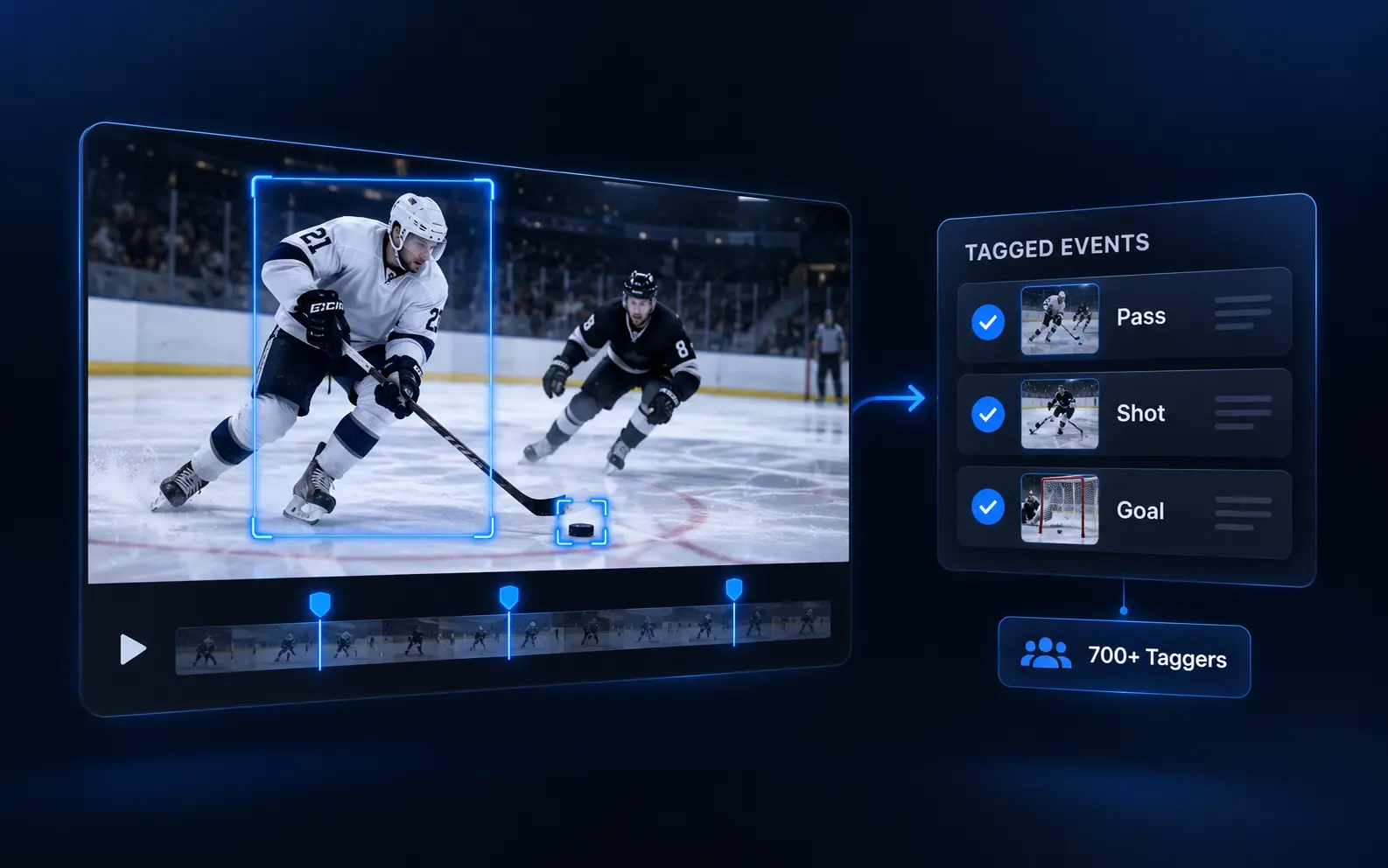
We tag CCTV footage from shopping malls to help AI tell a thief from a shopper. It sounds simple, but it doesn't. In a mall, everyone picks things up, checks prices, and puts them back down; that's normal behavior. Stealing looks almost identical on camera. Only very precise tagging teaches a model about the difference.
We also run defense projects. They're confidential, so we can't share details, but we do them.
Today our team works across France and India, covering retail, security, and satellite imagery.
1M+
images tagged every month
50+
people on the tagging team today
6 months
of training and trials before the operation found its footing
3
industries served: fashion, retail security, and satellite imagery (plus confidential defense work)
2
countries of operation: France and India
We walked in without knowing what the work even was. One DM, one person with an iPad, and 6 months of trial and error later, we became a core part of how AI learns to see fashion. Over a million images a month, and counting.
That's My Data Machine.
That's what we built.
We have built and scaled engineering teams for a US market leader and the Middle East’s first prop tech unicorn. We know how to find the right people, vet them, and get them delivering fast, and we shape the process around the way you work.
Get in touch